Pop-up toaster vs toaster oven — know what you're buying
This guide covers pop-up (slot) toasters only, not toaster ovens. A pop-up toaster is faster, cheaper and better at everyday toast, bagels and English muffins; a toaster oven is a mini-oven for baking, broiling and reheating. If you mainly make toast and bagels, a pop-up wins on speed, counter space and price — and if it is the baking and reheating you actually want, an air fryer does that job better than either. For one machine that toasts, bakes and air fries, our air fryer toaster oven picks cover that middle ground — though toast evenness is the weak point of that whole category.
2-slice or 4-slice?
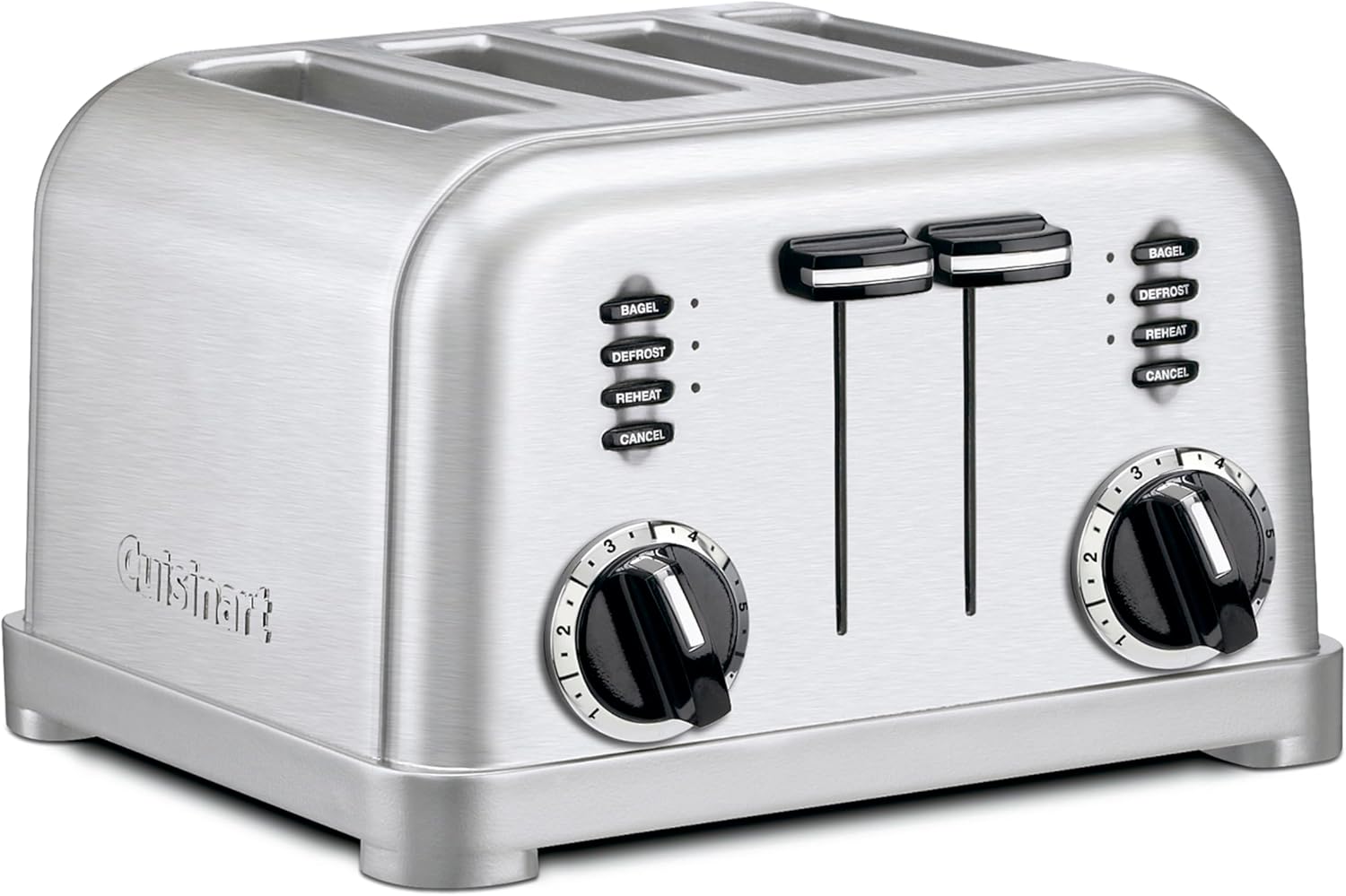
A 2-slice toaster suits singles, couples and small kitchens and costs less — and if the bread you toast is usually a filled sandwich rather than a plain slice, a sandwich press is the better buy at the same money. A 4-slice is worth it for families and batch breakfasts — but look for dual independent control panels (like the BUYDEEM DT640 and Cuisinart CPT-180) so you can toast two bread types, or just two slices, at once. Single-sensor 4-slices force both pairs to run together, which wastes energy and can burn one batch.
Even toasting is the hardest thing to get right
The single most common toaster complaint — across every price point — is uneven browning: one side darker than the other, a pale untoasted strip at the top, or results that change batch to batch. Wattage does not predict this (an 850W BLACK+DECKER and a 1000W Breville both toast fine; some 1800W units are uneven). Self-centering racks help. If evenness matters most to you, the Breville Luxe and Oster Advanced were the standouts in Canadian reviews.
Match the slots to your bread
If you eat bagels, thick artisan slices or sourdough, prioritise extra-wide slots (around 1.5 inches) and a good bagel function that heats only the cut side. A high-lift or extra-lift lever matters for retrieving small items like English muffins without burning your fingers. Nearly every toaster here has wide slots, but slot depth varies — the BUYDEEM's 4.3-inch depth swallows tall slices.
Warranty is your insurance against a category that fails early
Toasters commonly die in 1-3 years, usually from a lever that stops latching or an element that quits on one side. A long warranty backed by real service is genuine value: Hamilton Beach's 24218 offers 5 years, Cuisinart 3 years, while most premium units (Breville, Smeg) give only 1. Just as important is whether the maker honours it in Canada — Breville owners report fast free replacements, while Smeg's claim process drew complaints.
Don't pay for looks and assume performance follows
Design-forward toasters (Smeg, retro models) and premium-brand shells (KitchenAid) can charge a lot for styling without toasting any better — KitchenAid's reviews flag weak, uneven browning despite a solid metal body, and Smeg's premium price still draws one-side-only complaints. If you want the look, buy it for the look; if you want the best toast, the Breville and the budget Oster outperformed pricier style pieces.