We compared 12 rice cookers on Amazon.ca — from $50 one-touch models to premium induction — weighing cooking quality, pot durability, capacity and CAD value.
We may earn a commission via Amazon.ca affiliate links. Prices shown are indicative — check the retailer for current rates. This doesn't affect our reviews.
For millions of Canadian households — whether you cook jasmine, basmati, sushi rice or a batch of brown rice for meal prep — a good rice cooker quietly does one of the kitchen's most repetitive jobs perfectly, every single time. Set it, walk away, and come back to fluffy, evenly cooked grains with no scorched bottom or crunchy top, plus a keep-warm cycle that holds dinner while the rest of the meal comes together. In busy weeknight kitchens and open-concept homes, that hands-off reliability is worth far more than any single spec on the box.
To find the models actually worth buying, we compared 12 rice cookers available on Amazon.ca, from a $50 one-touch cooker for couples up to a $610 induction flagship, and dropped grey-market listings and units with no reviews from Canada. We weighed cooking performance and consistency, inner-pot durability (the category's number-one long-term failure), capacity fit, everyday ease of use, and durability-adjusted value with warranty — cross-checking specs against recurring themes in Canadian owner reviews.
Rated 9.3, this stainless-body fuzzy-logic cooker is the field's value benchmark — buyers pick it over cookers twice the price, so there's no need to spend more.
Based on cooking performance, inner-pot durability, capacity, ease of use and durability-adjusted value for Canadian kitchens — scored from specs cross-checked against reviews from Canada on Amazon.ca.
Scored out of 10
Cooking Performance 30%
The core job — even, fluffy rice with no scorched bottom across white, jasmine, basmati, sushi and brown. Heating type drives it: induction beats micom fuzzy logic beats basic one-touch.
Build Quality & Durability 25%
Inner-pot coating longevity is the category's #1 long-term failure. We rank full-stainless and thick ceramic pots above thin non-stick, and weigh lid, seal and hinge quality from real owner reviews.
Capacity & Sizing 15%
Uncooked-cup capacity matched to Canadian households — 3-cup for couples, 5.5-cup for families, 10-cup for crowds — noting that fuzzy-logic and IH cookers cook best at 50-80% full.
Ease of Use 15%
Control clarity, keep-warm quality, delay timers, detachable washable lids and dishwasher-safe pots. Fuzzy-logic auto-adjustment and features like auto water-sensing lower the effort.
Value & Warranty 15%
Durability-adjusted value — live CAD price against heating tech, pot quality and capacity — plus warranty length and real Canadian service.
+ Induction heating delivers the most even, consistent rice in the field
+ Handles white, sushi, brown, GABA and germinated brown rice superbly
+ Japanese build quality with a decade-plus reported lifespan
+ Excellent keep-warm that doesn't dry out or yellow the rice
+ Canadian warranty service honoured (free-postage repairs reported)
Cons
− Very expensive — roughly 4-5x the price of strong mid-range cookers
− Only a 1-year warranty despite the premium price
− Stainless exterior dents easily; inspect on unboxing
− 5.5-cup capacity is limiting for large families or entertaining
Rating Breakdown
Cooking Performance9.8
Build Quality & Durability9.6
Capacity & Sizing9.1
Ease of Use9.3
Value & Warranty8.7
Our Verdict
This is the best-cooking rice cooker in our entire test: induction heating warms the whole pot for astonishingly even, fluffy grains, and the Japanese build routinely lasts a decade or more. The only real catches are the steep ~$610 price and a lone 1-year warranty.
+ Versatile menu including cake, porridge and sushi settings
+ Clear-coated stainless exterior is easy to wipe clean
+ Retractable cord and simple, reliable controls
+ Enormous 13,000+ review base validates long-term reliability
Cons
− Keep-warm gasket/seal wears over time and can dry the rice
− PTFE non-stick pot and plastic steamer tray feel basic for the price
− Occasional error-code failures reported
− Large footprint takes significant counter space
Rating Breakdown
Cooking Performance9.6
Build Quality & Durability9.1
Capacity & Sizing9.7
Ease of Use9.1
Value & Warranty9.1
Our Verdict
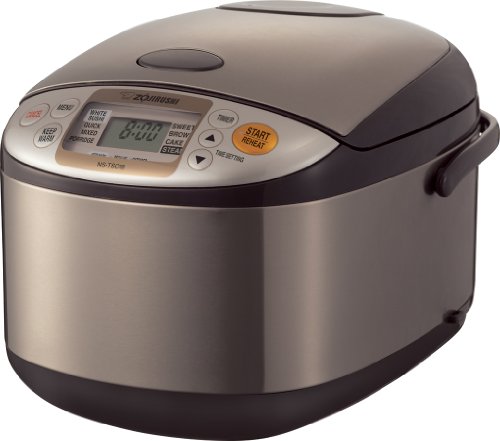
If you're feeding a big family or entertaining, this true 10-cup Zojirushi delivers restaurant-quality fuzzy-logic rice by the potful. The keep-warm seal can wear over years of use, but nothing else here pairs this much capacity with Zojirushi cooking at the price.
+ Ceramic PFOA-free pot resists the coating-peel failures that plague cheap non-stick
+ 3D surround heating gives even, never-burnt rice
+ 15 versatile programs including jasmine, basmati, GABA and oats
+ Excellent value — premium-style features at a mid-range price
+ Thick, quality-feeling inner pot per owner reviews
Cons
− 5.5-cup capacity may be tight for large families
− A minority report control-button quality issues
− Requires the included smaller measuring cup — easy to over-water otherwise
− Plastic exterior feels less premium than stainless models
Rating Breakdown
Cooking Performance9.4
Build Quality & Durability9.3
Capacity & Sizing9.1
Ease of Use9.3
Value & Warranty9.4
Our Verdict
This is the mid-range sweet spot: a thick 2mm ceramic pot that resists the coating peel plaguing cheap cookers, plus 3D surround heating for rice that never burns or sticks — all for about $143. Just remember to use the smaller included measuring cup so you don't over-water.
+ Highest sales velocity in the field (400+/month)
Cons
− Cook times are slow (≈40 min white, ≈70 min brown)
− Non-retractable detached cord
− Uses a smaller-than-standard measuring cup that's easy to misplace
− Standard PTFE pot rather than ceramic or stainless
Rating Breakdown
Cooking Performance9.4
Build Quality & Durability9.1
Capacity & Sizing9.3
Ease of Use9.1
Value & Warranty9.6
Our Verdict
The people's champion and the field's top seller: fuzzy-logic rice that buyers routinely rate on par with cookers twice the price, wrapped in a stainless body for around $126. The only real trade-off is slower cook times — roughly 40 minutes for a pot of white rice.
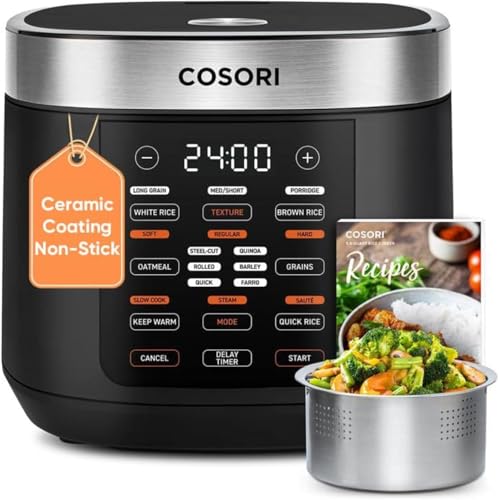
+ 18 functions — genuinely a rice cooker, steamer, sauté pan and slow cooker in one
+ Only 2-year warranty in the field
+ Dishwasher-safe ceramic pot and removable lid make cleanup effortless
+ 10-cup capacity for families and one-pot meals
+ Fluffy, consistent rice at any fill level per reviews
Cons
− Generalist multicooker — a hair behind dedicated rice specialists on pure rice quality
− Time-setting interface is fiddly
− Isolated reports of the lid not closing properly (QC)
− Large 5 qt footprint
Rating Breakdown
Cooking Performance9.2
Build Quality & Durability9.2
Capacity & Sizing9.4
Ease of Use9.1
Value & Warranty9.5
Our Verdict
With 18 functions and a dishwasher-safe ceramic pot, this Cosori is really a rice cooker, steamer, sauté pan and slow cooker rolled into one — and its 2-year warranty is the longest in the field. Dedicated rice purists will still edge toward a Zojirushi or Toshiba, but for one-pot versatility it's the pick.
+ Best grain variety in the field — dedicated jasmine, long-grain, quinoa and GABA settings
+ Perfect, repeatable results praised across English and French reviews
+ 2.5mm thick inner pan for even heating
+ Clear LCD with rice-type-specific menus
+ Compact 5.5-cup footprint for families of four
Cons
− Pricier than value rivals that cook nearly as well
− Small 290-review base — long-term reliability less proven
− Non-retractable power cord that some say fits loosely
− Beep-only alerts (no melody) and plastic exterior
Rating Breakdown
Cooking Performance9.5
Build Quality & Durability9.1
Capacity & Sizing9.1
Ease of Use9.1
Value & Warranty9.0
Our Verdict
This is the grain-variety specialist, with dedicated jasmine, long-grain, quinoa and GABA settings that reviewers say nail each one. You pay a bit more than value rivals and the review base is still small, but for households that rotate through many grains the tailored menus earn their keep.
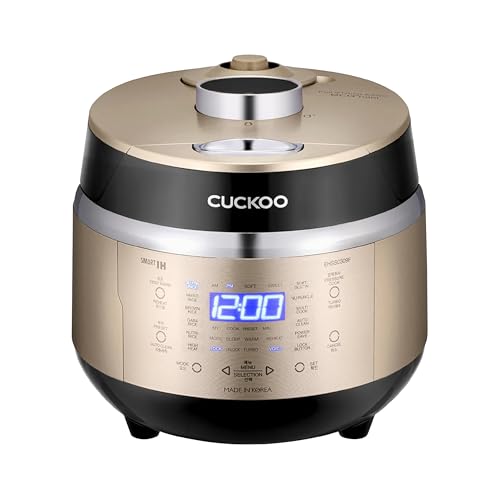
+ Induction + pressure produces the richest-tasting rice for enthusiasts
+ Full stainless inner pot — nothing to flake, peel or replace
+ Legendary Cuckoo durability (owners cite 10-15 year lifespans)
+ Voice navigation and comprehensive safety features
+ South Korean build quality reviewers call the 'Cadillac' of cookers
Cons
− Only 3-cup capacity — too small for families
− Expensive (~$435) for the capacity
− Defaults to Korean; changing language and learning the menus takes effort
− Pressure lid adds complexity vs a simple cooker
Rating Breakdown
Cooking Performance9.7
Build Quality & Durability9.8
Capacity & Sizing8.4
Ease of Use8.8
Value & Warranty8.6
Our Verdict
For a serious rice lover cooking for one or two, this is arguably the best-built cooker in the roundup: induction-plus-pressure cooking and a full-stainless pot with no coating to ever peel. The catches are the small 3-cup capacity and menus that default to Korean until you switch them.
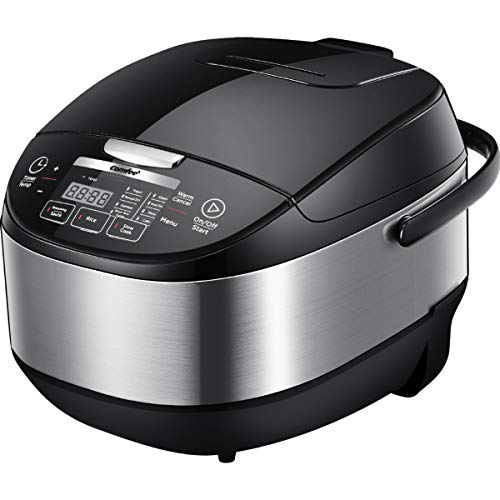
− Sparse printed instructions — some trial and error
− Display can be unclear about whether it's running
− Standard non-stick pot rather than ceramic or stainless
Rating Breakdown
Cooking Performance9.1
Build Quality & Durability9.0
Capacity & Sizing9.5
Ease of Use9.0
Value & Warranty9.6
Our Verdict
The budget-family champion: a genuine 10-cup fuzzy-logic multicooker with 11 programs for about $90, backed by more than 5,700 reviews. It won't out-cook a Zojirushi, and the printed instructions are thin, but nothing else this affordable does this much.
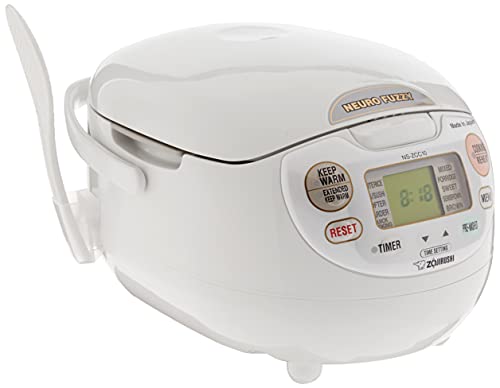
+ Legendary Neuro Fuzzy cooking — forgiving and consistently excellent
+ Superb for sushi and Japanese short-grain rice
+ Wide, well-tuned menu including porridge and rinse-free
+ Very light and wall-mountable; retractable cord
+ Massive 11,000+ review base and cult following
Cons
− Recurring recent reports of inner-pot coating peeling into the rice
− Sealed clock battery dies ~5 years in and can't be user-replaced (costly service)
− Occasional dead-on-arrival / power-fault units
− Only a 1-year warranty despite premium positioning
Rating Breakdown
Cooking Performance9.6
Build Quality & Durability8.9
Capacity & Sizing9.1
Ease of Use9.1
Value & Warranty8.8
Our Verdict
The cult-classic Neuro Fuzzy remains one of the best-cooking micom cookers for sushi and Japanese short-grain rice. But go in eyes-open: recent Canadian reviews flag the inner-pot coating peeling and a sealed clock battery that dies around five years in and can't be user-replaced.
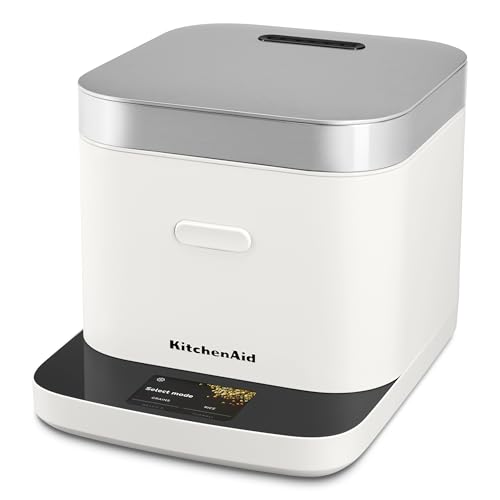
+ Integrated scale + auto-sensing removes water measuring entirely
+ Foolproof for beginners — pour until it says stop
+ Cooks a wide range of rice, grains and beans well
+ Dishwasher-safe ceramic pot, steam basket and inner lid
+ Compact 9-inch footprint saves counter space
Cons
− Premium price for a compact 8-cup (cooked) capacity
− Build feels a touch light for the price to some owners
− Only 71 reviews — reliability not yet proven
− Plastic exterior
Rating Breakdown
Cooking Performance9.3
Build Quality & Durability9.0
Capacity & Sizing9.0
Ease of Use9.6
Value & Warranty8.8
Our Verdict
This is the most beginner-friendly cooker in the field: an integrated scale and auto water-sensing mean you pour until it says stop and never measure again. You pay a premium for the innovation and, with only 71 reviews so far, its long-term reliability is still unproven.
+ Versatile 15 modes including Sauté-Then-Simmer and slow cook
+ Large 10-cup / 5-quart capacity for families
+ Bonus steamer basket for one-pot meals
+ Strong value at around $100
+ Owners report energy savings versus stovetop cooking
Cons
− Display shows dashes rather than a cook-time countdown on most modes
− Isolated reports of sensors failing and burning food
− Standard non-stick pot
− Rice quality is good, not class-leading
Rating Breakdown
Cooking Performance9.1
Build Quality & Durability8.9
Capacity & Sizing9.4
Ease of Use8.8
Value & Warranty9.3
Our Verdict
A capable 10-cup multicooker whose Sauté-Then-Simmer mode and bundled steamer make it a flexible family workhorse for around $100. Its main annoyance is a display that shows dashes instead of a cook-time countdown on most modes.
+ Very affordable (~$50) from a respected rice-cooker brand
+ Dead-simple one-touch operation — great for students and couples
+ Steam tray enables rice-plus-veg one-pot meals
+ Light, fluffy rice per most reviews; easy to clean
+ Compact 6-cup size fits small kitchens
Cons
− Basic on/off cooking — no fuzzy-logic adaptivity
− Some owners report the bottom layer scorching
− No delay timer or auto shut-off beyond keep-warm
− Entry-level plastic-and-glass construction
Rating Breakdown
Cooking Performance8.8
Build Quality & Durability8.7
Capacity & Sizing9.1
Ease of Use9.1
Value & Warranty9.4
Our Verdict
The best sub-$50 pick: dead-simple one-button operation, a steamer tray and a trusted rice-cooker brand, ideal for couples or students. Don't expect fuzzy-logic finesse — rinse your rice well to avoid the occasional scorched bottom layer.
Heating technology: one-touch vs micom vs induction
The single biggest driver of rice quality is how the cooker heats. Basic one-touch (on/off) cookers like the Cuckoo One Touch and IMUSA simply boil until the water is gone — cheap and fine for casual use, but they can scorch the bottom and can't adapt. Micom (fuzzy-logic) cookers — most Zojirushi, Toshiba, Cosori and Comfee models here — use a microchip to sense temperature and adjust the cook, giving consistently fluffy results. Induction heating (IH), found in the Zojirushi NP-HCC10 and Cuckoo IH, heats the whole pot electromagnetically for the most even, best-tasting rice, at a premium price. Spend up the ladder only as far as your rice standards (and budget) justify.
The inner pot is what fails first — check the coating
The most common long-term complaint across the entire category is inner-pot coating that flakes or peels into the rice, sometimes within months. Even the beloved Zojirushi NS-ZCC10 draws recent Canadian complaints about this. Your best defences: a full-stainless pot (Cuckoo IH — nothing to peel), or a thick multi-layer ceramic pot (Toshiba RC-10DRUNA, Cosori, KitchenAid). Always use the plastic/wooden spatula provided, never metal, and hand-wash the pot unless it's explicitly dishwasher-safe. A thicker pot (2mm+) also heats more evenly.
Size it to your household — and remember 'cups' means uncooked
Rice-cooker capacity is quoted in uncooked cups, which roughly double when cooked. A 3-cup (like the Cuckoo IH) suits singles or couples; 5.5-cup (Zojirushi NP-HCC10, NS-ZCC10, Toshiba RC-10DRUNA) fits most families; 10-cup (Zojirushi NS-TSC18, Comfee, Cosori, Aroma) is for large families or entertaining. Fuzzy-logic and IH cookers actually cook best when 50-80% full, so don't buy a 10-cup unit if you usually make one or two cups — you'll get better rice from a right-sized cooker.
Warranty and Canadian service matter more than the badge
Warranties here range from IMUSA's 30 days (a red flag) to Cosori's 2 years (the longest), with most brands at 1 year. Just as important is whether the warranty is actually honoured in Canada — one reason we drop products with zero Canadian reviews (they're often US-market SKUs with unclear cross-border service). Zojirushi owners in our review scan reported free-postage repairs handled in Canada, which is reassuring. Factor durability-adjusted value: a cheap cooker whose pot fails in a year is more expensive than a mid-range one that lasts five.
Convenience features worth paying for (and ones to ignore)
Genuinely useful: a good keep-warm that doesn't dry or yellow the rice, a delay timer (wake up to fresh rice), a detachable/washable inner lid (fewer odours), and a dishwasher-safe pot. Standout innovation: KitchenAid's integrated scale auto-measures water so you never use a measuring cup. Nice-to-have: a steamer basket for one-pot meals (most models include one). Don't over-value long preset lists — a cooker with '18 functions' isn't better at rice than one with 7; those extras matter only if you'll actually slow-cook or sauté.
Watch for the small annoyances reviewers flag
A few recurring gripes are worth knowing before you buy: many cookers ship with a smaller-than-standard measuring cup — use it, or you'll over-water; several (Toshiba, newer Zojirushi micom) have non-retractable cords; some budget displays (Aroma) don't show a cook-time countdown; and keep-warm seals/gaskets can wear over years (Zojirushi NS-TSC18), letting rice dry out. None are dealbreakers, but they explain the difference between a 4- and 5-star ownership experience.
Frequently Asked Questions
Is an induction (IH) rice cooker worth the extra money?
If you eat rice several times a week and care about texture, yes — IH models like the Zojirushi NP-HCC10 and Cuckoo IH heat the entire pot evenly and produce noticeably better, more consistent rice, and owners report decade-plus lifespans. If you eat rice occasionally, a good micom (fuzzy-logic) cooker like the Toshiba TRCS01 delivers 90% of the result for a third of the price.
Why do rice-cooker inner pots peel, and how do I prevent it?
Thin non-stick coatings degrade with metal utensils, abrasive scrubbing, and heat cycling. To prolong life, only use the included plastic or wooden spatula, hand-wash the pot gently (unless it's labelled dishwasher-safe), and don't stack items inside it. To avoid the problem entirely, choose a full-stainless pot (Cuckoo IH) or a thick ceramic pot (Toshiba RC-10DRUNA, Cosori).
What size rice cooker should I buy?
Match uncooked-cup capacity to your household: 3-cup for 1-2 people, 5.5-cup for a family of 3-4, and 10-cup for large families or entertaining. Remember capacity is in uncooked cups (roughly doubling when cooked), and that fuzzy-logic/IH cookers cook best at 50-80% full — so buy the size you'll actually use, not the biggest.
Can these cookers make more than white rice?
Yes. Most micom and multicooker models here handle brown, jasmine, basmati, sushi, GABA and multigrain rice, plus quinoa, oatmeal, congee/porridge, steaming, and even cake. The Zojirushi NL-DCC10CP has the widest dedicated grain menu, while the Cosori and Aroma add sauté and slow-cook functions for one-pot meals.
Are the cheaper cookers (Comfee, Cuckoo One Touch, IMUSA) any good?
The Comfee (fuzzy logic, 10-cup, ~$90) and Cuckoo One Touch (~$50) are genuinely good value and cook fine rice for most people. The budget trade-offs are simpler electronics, thinner pots, and shorter warranties. We dropped the IMUSA specifically for its 30-day warranty and reports of uneven cooking — a rare case where a cheap cooker isn't worth even its low price versus the alternatives.
Why were some highly-rated rice cookers left off this list?
We drop any product with zero reviews from Canadian customers, even if it has thousands of global ratings — these are usually US-market SKUs where Canadian warranty, service and certification are unverified (the Toshiba Heritage Bento Box was one). We also exclude products that aren't reliably purchasable, like the Tiger JAZ-A18U, which had only an inflated third-party listing and no buy-box.
Does the Zojirushi NS-ZCC10's coating and clock-battery issue mean I shouldn't buy it?
Not necessarily — it's still one of the best-cooking micom cookers for sushi and Japanese rice, with a huge fan base. But go in informed: recent Canadian reviews report inner-pot coating peeling and a sealed clock battery that dies around the 5-year mark and can't be user-replaced. If long-term durability is your priority, the Cuckoo IH (stainless pot) or Toshiba RC-10DRUNA (thick ceramic pot) are safer bets.
Do I really need to rinse rice before cooking?
For most white and sushi rice, yes — rinsing removes surface starch that causes gumminess and can contribute to a scorched bottom layer, a complaint we saw on basic cookers. Use the measuring cup included with your cooker (they're often smaller than a standard cup) and follow the pot's water lines rather than generic ratios for best results.
Our Verdict
For Canadians who take their rice seriously, the Zojirushi NP-HCC10XH is the best cooker we tested. Its induction heating turns out the most even, fluffy grains in the field and the Japanese build is reported to last a decade-plus — well worth the ~$610 if rice is a daily staple in your home.
Feeding a crowd? The 10-cup Zojirushi NS-TSC18 ($262.45) serves up the same gold-standard fuzzy-logic rice by the potful, making it the default for large families and entertaining. And if you cook for just one or two but want the best-built pot money can buy, the Cuckoo IH pressure cooker ($434.99) and its full-stainless bowl will outlive every coated rival.
On a budget, two picks stand out: the Toshiba TRCS01 ($126.18) is the value benchmark — fuzzy-logic rice that rivals cookers twice the price — while the 10-cup Comfee' ($89.99) is the cheapest way to feed a family well. For couples or students, the ~$50 Cuckoo One-Touch keeps it simple and reliable.
ChefPicks uses Google Analytics cookies to understand how the site is used, so we can
improve it. Analytics stays off until you accept. See our
Privacy Policy for details.